Firewood BTU Chart PDF: A Comprehensive Guide
Navigating the world of firewood requires understanding its energy output, often detailed in a firewood BTU chart PDF․ These charts offer a quick reference for comparing wood types, aiding in efficient heating and cost-effective fuel choices for your wood-burning needs․
Understanding BTU and its Importance
BTU, or British Thermal Unit, represents the fundamental unit of heat – specifically, the amount of energy needed to raise the temperature of one pound of water by one degree Fahrenheit․ In the context of firewood, a firewood BTU chart PDF showcases the heat energy released when a cord (a standard unit of wood volume) is completely burned․
Understanding BTU is crucial because it directly correlates to a wood’s heating capability․ Higher BTU values signify more heat output, meaning less wood is required to achieve the desired warmth․ This knowledge empowers informed decisions when selecting firewood, optimizing burn times, and ultimately reducing heating costs․ Furthermore, considering BTU alongside factors like wood density and moisture content provides a holistic view of firewood performance, ensuring efficient and sustainable heating solutions․ A reliable firewood BTU chart PDF is therefore an invaluable tool for any wood burner․
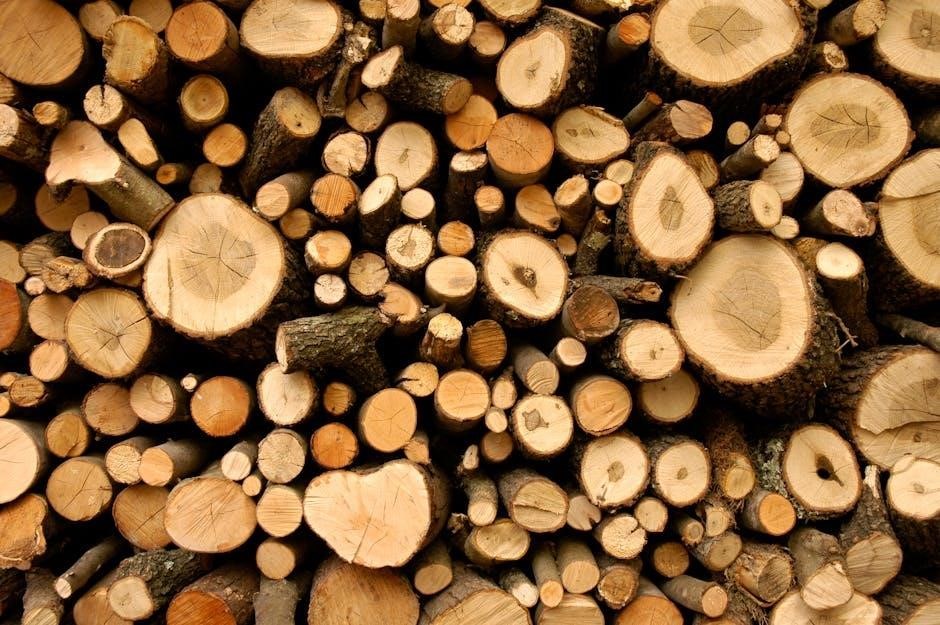
What is a BTU? (British Thermal Unit)
A British Thermal Unit (BTU) is the standard measurement for quantifying heat․ More precisely, one BTU is the energy required to increase the temperature of one pound of water by one degree Fahrenheit․ When examining a firewood BTU chart PDF, the BTU value indicates the amount of heat released when a specified volume of wood – typically a cord – is completely combusted․
It’s important to note that BTU values are influenced by wood density and moisture content․ While all wood, devoid of pitch, possesses the same BTU per unit of oven-dry weight, a firewood BTU chart PDF typically presents values per cord, accounting for average species weight․ Therefore, understanding that these are averages, and actual burn characteristics can vary, is key to interpreting the information effectively․ Ultimately, BTU provides a comparative metric for assessing firewood’s heating potential․
Why Use a Firewood BTU Chart?
Utilizing a firewood BTU chart PDF empowers informed decisions when sourcing firewood․ These charts allow for direct comparison of different wood species, enabling you to select wood that maximizes heat output for your needs․ Knowing the BTU value helps estimate how long a given volume of wood will burn, aiding in efficient heating and reducing refueling frequency․
Furthermore, a firewood BTU chart PDF assists in cost-benefit analysis․ While some woods are pricier, their higher BTU rating might translate to lower overall heating costs․ It’s also valuable for understanding how different woods burn – some burn hotter and faster, while others provide a slower, sustained heat․ Accessing this information, often compiled into convenient PDF formats or Google Sheets, streamlines firewood selection and optimizes your wood-burning experience․

Common Firewood Types and Their BTU Values
Exploring various firewood options reveals significant BTU differences; charts detail these values for species like oak, maple, pine, birch, and ash, guiding optimal choices․
Hardwood vs․ Softwood: A BTU Comparison
Generally, hardwood trees yield firewood with higher BTU values compared to softwood varieties․ This difference stems from hardwood’s denser wood structure, packing more energy into a given volume․ Firewood BTU charts PDF consistently demonstrate this, showcasing oak, maple, and ash significantly outperforming pine or birch in heat output per cord․
However, it’s crucial to remember that BTU per unit of weight is relatively consistent across wood types – the variance lies in density․ Softwoods, while lower in BTU per cord, ignite more easily and burn faster, making them suitable for quick starts or supplemental heating․ Charts often present BTU values per cord, which can be misleading without considering wood density․ Understanding this nuance is vital when interpreting firewood BTU chart PDF data and selecting wood for specific needs․ The charts help visualize these differences, aiding informed decisions․
Oak Firewood BTU Chart
Oak consistently ranks among the top firewood choices, and an oak firewood BTU chart reflects its impressive energy density․ Typically, a cord of seasoned oak yields between 20 to 30 million BTUs, depending on the specific oak species (red oak generally has slightly more BTU than white oak)․ Firewood BTU chart PDF resources often detail these variations․
However, remember that these are averages; actual BTU output is affected by moisture content and wood density․ A well-seasoned oak cord, with moisture below 20%, will deliver significantly more heat․ Charts frequently present BTU values assuming seasoned wood․ Oak’s slow burn time and coal-like embers contribute to its efficiency․ When consulting an oak firewood BTU chart, consider these factors for accurate heating estimations and optimal firewood selection for long-lasting warmth․
Maple Firewood BTU Chart
A maple firewood BTU chart showcases this wood’s excellent heating capabilities, making it a popular choice for home heating․ Generally, a cord of seasoned maple provides approximately 20 to 26 million BTUs․ Different maple species – sugar maple, red maple, and silver maple – exhibit slight variations in BTU output, often detailed in comprehensive firewood BTU chart PDF guides․
Maple burns relatively cleanly, with moderate smoke production, and creates warm, bright flames․ Like oak, proper seasoning is crucial; moisture content significantly impacts BTU yield․ A maple firewood BTU chart assumes seasoned wood (below 20% moisture)․ It also offers a good balance between heat output and ease of splitting, though it can be harder to split than some softwoods․ Referencing a chart alongside considering these factors ensures informed firewood choices for efficient and enjoyable fires․
Pine Firewood BTU Chart
A pine firewood BTU chart reveals a lower energy output compared to hardwoods, typically ranging from 15 to 20 million BTUs per cord when properly seasoned․ While readily available and easy to split, pine’s lower density contributes to its reduced heat value, as detailed in many firewood BTU chart PDF resources․
Pine contains more resinous sap, leading to increased smoke production and potential creosote buildup in chimneys – requiring more frequent cleaning․ A pine firewood BTU chart is useful for understanding its limitations, often best suited for quick, temporary fires or shoulder-season heating․ It ignites easily, making it good for starting fires, but burns quickly; When consulting a chart, remember that moisture content dramatically affects BTU output; seasoned pine is essential for optimal performance and safety․
Birch Firewood BTU Chart
A birch firewood BTU chart typically shows a heat output between 20 to 25 million BTUs per cord, positioning it as a mid-range option in terms of energy content, as found in many firewood BTU chart PDF guides․ Birch is known for its relatively quick burn and pleasant aroma, making it a popular choice for recreational fires․
However, birch can be prone to rotting if not stored properly, and some species, like paper birch, have a lower density than others, impacting BTU values․ A birch firewood BTU chart should be consulted alongside information on specific birch varieties․ Like pine, birch contains some resins, leading to moderate smoke production; Seasoning is crucial; well-seasoned birch burns cleaner and hotter․ Charts often highlight the importance of moisture content for maximizing heat output and minimizing creosote buildup․
Ash Firewood BTU Chart
An ash firewood BTU chart generally indicates a high heat output, ranging from 24 to 32 million BTUs per cord, making it one of the most efficient hardwoods, frequently detailed in firewood BTU chart PDF resources․ White ash typically boasts higher BTU values than green ash․ Ash is prized for its ease of splitting, relatively straight grain, and long, consistent burn․
It seasons quickly, often within six to twelve months, and burns with a steady flame and minimal smoke when properly dried․ A ash firewood BTU chart will often emphasize the importance of full seasoning for optimal performance․ Ash is considered a premium firewood choice due to its combination of high heat output, ease of use, and clean burning characteristics․ Charts may also note its suitability for various wood-burning appliances, from fireplaces to wood stoves․

Factors Affecting BTU Output
BTU output isn’t fixed; moisture content, wood density, and proper seasoning significantly impact heat generation, as detailed in a comprehensive firewood BTU chart PDF․
Wood Moisture Content and BTU
Understanding the relationship between wood moisture content and BTU output is crucial when consulting a firewood BTU chart PDF․ Freshly cut, or “green” wood, contains a high percentage of water – often exceeding 50%․ This drastically reduces its heating efficiency․ A significant portion of the energy from burning is used to evaporate the water instead of producing heat․
Conversely, properly seasoned wood, ideally with a moisture content of 20% or less, burns much hotter and cleaner․ The energy released goes directly into warming your space․ A firewood BTU chart PDF typically assumes seasoned wood when listing BTU values․ Therefore, using unseasoned wood will yield significantly lower heat output than indicated on the chart․ Investing in a moisture meter is highly recommended to ensure optimal burning performance and maximize the benefits of your chosen firewood, as detailed in many firewood BTU chart PDF guides․
Wood Density and BTU
When interpreting a firewood BTU chart PDF, wood density plays a pivotal role in determining heat output․ Denser woods, like oak and maple, contain more wood fiber per unit volume compared to lighter woods like pine or birch․ This increased density translates directly into a higher BTU value․
Although BTU values are often presented per cord, it’s important to remember that a cord of denser wood will weigh more and, consequently, deliver more total energy․ The charts often list BTU per oven-dry weight, meaning the energy content is consistent regardless of species, but volume measurements are affected by density․ Therefore, a cord of oak will provide significantly more heat than a cord of pine․ Consulting a firewood BTU chart PDF alongside understanding wood density ensures informed firewood selection for optimal heating efficiency and value․
Seasoning Process and its Impact
A firewood BTU chart PDF provides nominal heat values, but these are only achievable with properly seasoned wood․ The seasoning process – air-drying wood to reduce its moisture content – dramatically impacts BTU output․ Freshly cut (“green”) wood contains a high percentage of water, consuming significant energy during combustion simply to evaporate that moisture, reducing usable heat․
Ideally, firewood should be seasoned for at least six months, and preferably longer, reaching a moisture content below 20%․ A firewood BTU chart PDF assumes seasoned wood; unseasoned wood can yield 30-50% less heat․ Proper stacking to allow airflow is crucial․ Investing time in seasoning maximizes the benefits indicated in any firewood BTU chart PDF, ensuring efficient burning, reduced smoke, and a cleaner, hotter fire․
Cord vs․ Face Cord vs․ Rick: Understanding Volume Measurements
When utilizing a firewood BTU chart PDF, understanding volume measurements is critical for accurate heat calculations․ A “cord” is the standard unit, measuring 4 feet high, 4 feet wide, and 8 feet long – totaling 128 cubic feet․ However, “face cords” (or short cords) are frequently sold, measuring 4ft x 8ft but with varying lengths, making BTU comparisons misleading․
A firewood BTU chart PDF typically lists BTU values per cord․ Therefore, a face cord will contain fewer BTUs than a full cord․ A “rick” is an even smaller, loosely stacked pile, offering the least reliable volume estimate․ Always clarify the measurement being used when purchasing firewood and adjust BTU calculations accordingly to get the most from your firewood BTU chart PDF․

Accessing and Utilizing Firewood BTU Charts
Reliable firewood BTU chart PDF resources are readily available online, alongside Google Sheets and calculators, simplifying wood selection and maximizing heating efficiency for users․

Finding Reliable Firewood BTU Charts (PDF Format)
Locating trustworthy firewood BTU chart PDF documents is crucial for accurate heating calculations․ Many university extension offices, like those focused on forestry, provide scientifically-backed charts detailing BTU values for various wood species․ These are often considered highly reliable sources․ A quick online search using keywords like “firewood BTU chart PDF,” “wood heating BTU guide,” or “[your state] firewood BTU chart” will yield numerous results․
However, exercise caution! Not all charts are created equal․ Prioritize PDFs from reputable institutions or government agencies․ Look for charts that specify the moisture content of the wood tested, as this significantly impacts BTU output․ Beware of charts lacking source information or appearing on questionable websites․ Some users create and share Google Sheets as a convenient, filterable alternative to static PDFs, offering a dynamic way to compare wood types․ Remember to cross-reference information from multiple sources to ensure accuracy before making purchasing decisions․
Google Sheets and Online BTU Calculators
Beyond static firewood BTU chart PDF documents, Google Sheets offer a dynamic and customizable solution․ Several users have compiled comprehensive BTU data into shareable spreadsheets, allowing for easy filtering and sorting of wood types․ These sheets often include additional information like splitting difficulty and smoke production․ Online BTU calculators are also available, enabling you to estimate the heat output based on the type and quantity of wood burned․
These tools are particularly useful for those who prefer a more interactive experience or need to perform specific calculations․ However, always verify the source of the data used in these tools․ Ensure the information is based on reliable testing methods and considers wood moisture content․ While convenient, online calculators should be used as estimates, and cross-referencing with established BTU charts is always recommended for precise heating planning․ The ability to add conditional formatting enhances usability․
Interpreting BTU Values Per Cord
When reviewing a firewood BTU chart PDF, understanding BTU values “per cord” is crucial, but can be misleading․ BTU per cord represents the total heat output of a standard cord of wood (4ft x 4ft x 8ft), but doesn’t account for variations in wood density․ Different species have different average weights per cubic measure, impacting the BTU/cord figure․
It’s important to remember that these are averages; actual weight can vary within a species․ Furthermore, the way wood burns – its burn rate and heat intensity – isn’t solely determined by BTU content․ A higher BTU/cord doesn’t automatically mean “better” firewood․ Consider the specific needs of your stove or fireplace․ Focus on oven-dry weight BTU values for a more accurate comparison, as all wood without pitch shares similar BTUs per unit of weight․

Beyond BTU: Considerations for Firewood Selection
While firewood BTU chart PDFs are helpful, factors like splitting ease, smoke levels, wood identification, and cost significantly influence optimal firewood choices for your heating needs․
Ease of Splitting and Handling
Beyond the numbers presented in a firewood BTU chart PDF, the physical effort required to prepare firewood is a crucial consideration․ Some wood types, like Oak, are notoriously difficult to split due to their dense grain and interlocking fibers, demanding significant strength and a sharp splitting maul․ Conversely, softer woods such as Pine split readily, requiring less exertion․
Handling also plays a role; lighter woods are easier to carry and stack, reducing physical strain․ A balance must be struck between BTU output and workability․ A high-BTU wood that’s excessively challenging to split might not be the most practical choice if you’re responsible for the entire wood processing cycle․ Consider your physical capabilities and available tools when selecting firewood, supplementing BTU data with practical usability assessments․ Prioritizing ease of handling can make the heating season more enjoyable and sustainable․
Smoke Production and Environmental Impact
While a firewood BTU chart PDF focuses on heat output, it doesn’t reveal the complete environmental picture․ Smoke production varies significantly between wood species, impacting air quality and potentially contributing to respiratory issues․ Softwoods, particularly those with high resin content like Pine, tend to produce more smoke than hardwoods․
Burning seasoned wood is paramount; unseasoned wood creates excessive smoke and creosote buildup, increasing fire risk and reducing efficiency․ Consider the environmental impact – sustainably sourced firewood minimizes deforestation․ Efficient wood stoves and proper burning techniques further reduce emissions․ Choosing cleaner-burning hardwoods and prioritizing dry, seasoned wood are responsible choices that complement the BTU information found in charts, promoting both warmth and environmental stewardship․
Wood Identification Resources
Accurately identifying firewood is crucial when utilizing a firewood BTU chart PDF, as BTU values are species-specific․ Misidentification can lead to inaccurate heating expectations․ Fortunately, numerous resources aid in wood identification․ Online databases with detailed images of bark, leaves, and wood grain are invaluable․
Field guides dedicated to tree and wood identification provide comprehensive information․ Local forestry departments or arborists can offer expert assistance․ Many websites and forums dedicated to firewood enthusiasts feature identification assistance from experienced users․ Learning to identify wood not only ensures accurate BTU calculations but also promotes responsible wood sourcing and appreciation for the natural world․ Remember, correct identification unlocks the full potential of your firewood chart․
Cost-Effectiveness and Availability

When consulting a firewood BTU chart PDF, consider cost-effectiveness alongside energy output․ A wood with a high BTU value isn’t always the cheapest option․ Local availability significantly impacts price; transporting wood over long distances adds to the cost․ Explore local suppliers, including tree services offering wood, and consider splitting your own wood to save money․
Compare prices per cord, face cord, or rick, understanding the volume differences․ Factor in labor costs if you aren’t splitting the wood yourself․ Sustainable sourcing is also important – ensure the wood comes from responsibly managed forests․ Balancing BTU value, price, and accessibility will maximize your heating investment and ensure a consistent fuel supply throughout the season․